
VILLA VERANES
DESARROLLA HAS COMPLETED THE CLEANING AND RESTORATION WORKS AT THE VERANES ROMAN VILLA, A HISTORIC SITE OF IMMENSE VALUE
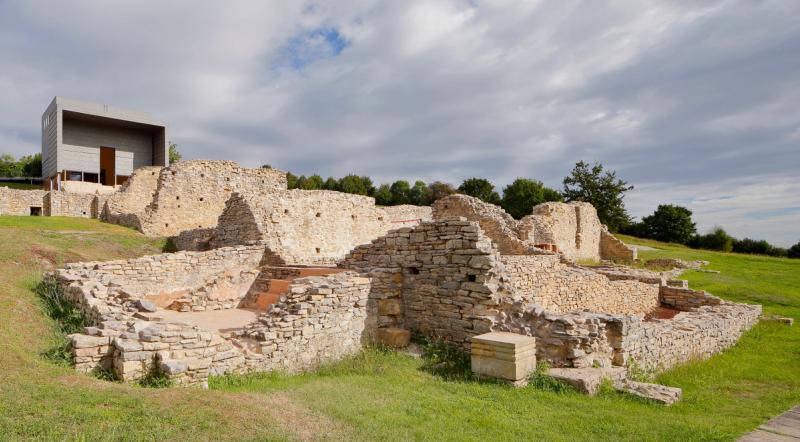
There are few documents more compelling for understanding our history than buildings themselves. The constructions that have withstood the passage of time and the impact of both people and nature provide us with an immense amount of information about how our ancestors lived and how past societies operated. That is why the cleaning and restoration of a magnificent Roman villa such as the one in Veranes (Gijón) is a task of enormous historical, heritage, and architectural value.Through the different rooms that make up the villa of Veranes we can discover what Roman architecture was like, what the social, political, and cultural habits were, and how Christianity gradually took root in our country.Desarrolla has just completed the cleaning and restoration of the Roman villa of Veranes, a project promoted by the Gijón City Council, in which the company’s team has worked side by side with the restorers of Terra Arqueos. Below, we share more about the work that has been carried out and its importance in ensuring the conservation of this Roman villa.
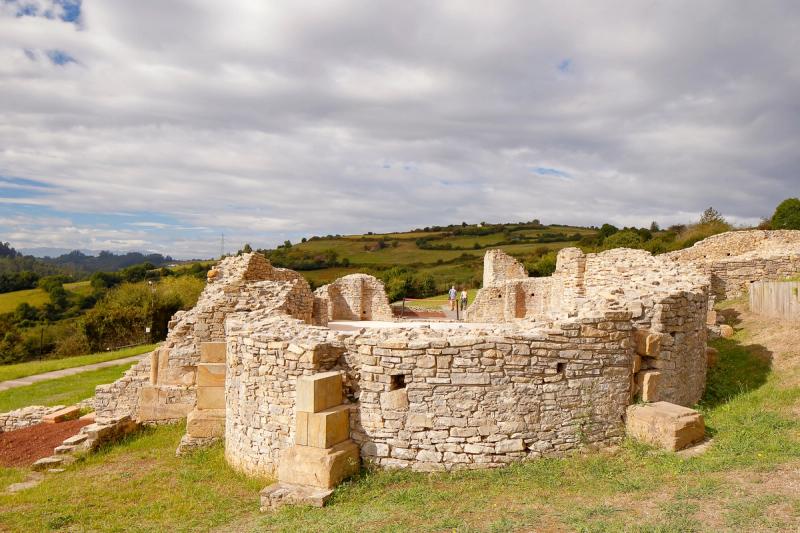
Veranes, from representation to comfort
Why are the cleaning and restoration of the Roman villa of Veranes so important? What makes this archaeological site a place of extraordinary value? Among all the features of this villa, we can highlight three that are crucial and that, in turn, increase the complexity of the cleaning and restoration work:
- The sections of a large Roman house. The Veranes villa was an aristocratic complex, which meant it included a bathing area, spacious private rooms for the comfort of the resident family, and a formal reception area. In other words, spaces designed to welcome visitors and serve as key hubs for the social, political, and cultural life of the surrounding area. All of these rooms can be seen at the Veranes archaeological site. These spaces, due to their specific characteristics, require specialized measures to ensure their cleaning and restoration.
- The mosaics and mural paintings. Some of the most outstanding elements of this architectural complex are three 4th-century mosaics located in the villa’s reception areas, one of which was placed in a space that would later be transformed into an abbey with the emergence of Christianity. The mural paintings preserved at this site are also of great importance.
- Historical evolution. Specifically, the transformation of the villa into a place of Christian worship adds a new layer of historical and cultural interest. In addition to a basilica, during the Middle Ages an extensive necropolis was established on this one-hectare estate.
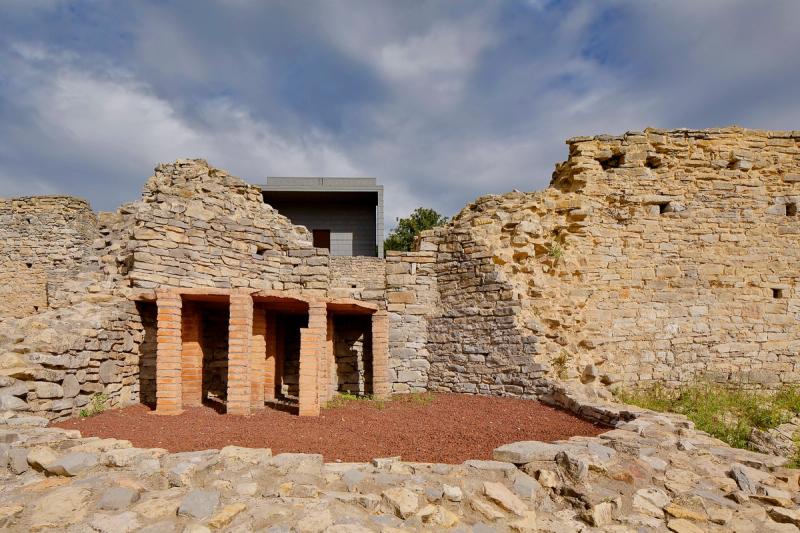
MINIMAL INTERVENTION, AUTHENTICITY AND REVERSIBILITY
Taking into account the specific characteristics of this Asset of Cultural Interest (BIC), the cleaning and restoration work carried out by the Desarrolla team was undertaken following three main criteria:
- Minimal intervention.
- Authenticity.
- Reversibility ofcleaning and restoration.
Hence the decision to use the same traditional materials with which the various structures that make up the villa were originally built.With regard to the treatments applied, it is important to highlight their diversity, tailored to the specific features of each structure or space, as well as to their condition and the issues they present.Thus, throughout the intervention, general treatments were combined with specific ones. The aim at all times has been to help, through the cleaning and restoration work, to slow down the deterioration of this valuable historical heritage and restore the splendour of the Roman villa of Veranes.
General cleaning and restoration treatments
The six general cleaning and restoration treatments carried out over the three months of work are:
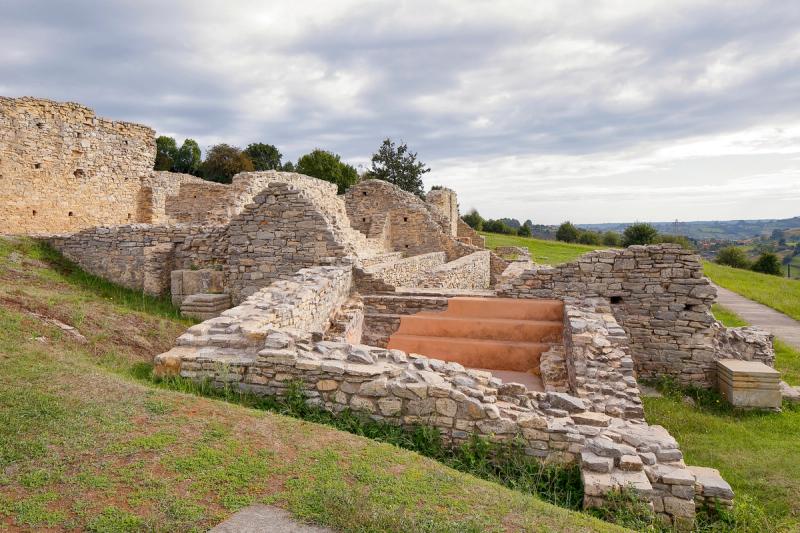
- Cleaning and removal of bryophytes. Whatever happens, nature always finds a way. At times this is wonderful, but in others it can be detrimental to the state of conservation of a building. For this reason, the vegetation that was growing, particularly in the dampest areas of the villa, has been removed. In addition, all walls have been cleaned of biological colonization, using manual methods such as scalpels or metal spatulas, with the utmost care.
- Cleaning with water jet. A general cleaning was carried out in the areas where the stones and mortar were covered with encrustation or dirt. Since the state of conservation differed, the cleaning and restoration were tailored to the needs of each structure, with particular attention to the most damaged areas. Likewise, in the areas with more vegetation or contamination crusts, the cleaning was more thorough.
- Cleaning and raking of gravel surfaces.
- Raking out jointsAfter completing the general cleaning of the site, the next step was to consolidate and prepare the wall faces, ensuring that the structures can withstand the harsh weather conditions of the northern peninsula.
- Pointing of masonry and consolidation. Next, a thorough and meticulous pointing was carried out, sealing the existing joints and cracks, thereby reducing the surface exposed to weathering.
- Water-repellent treatment. Once all the previously described work had been completed, water-repellent treatment was carried out across the entire complex.
Targeted solutions and tailored treatments for each space
Beyond the six general treatments of cleaning and restoration mentioned above, the Desarrolla team also carried out targeted interventions focused on specific areas and structures of the site, to ensure its protection and preservation. Among these actions, we can highlight:
- The installation of wooden thresholds to ensure the stability of the walls.
- Reproduction of earthen flooring.
- Cleaning and consolidation of remaining plasterwork.
- Removal and replication of the preserved mural paintings.
In addition, each room of the Roman villa of Veranes was the focus of dedicated work. From the basilica to the covered hall that houses one of the best-preserved mosaics, and including galleries and corridors as well as the granary, the kitchen, and the pool.In this way, the work carried out by the professionals at Desarrolla Obras y Servicios has involved the comprehensive cleaning and restoration of this architectural complex, protecting it from the passage of time and ensuring its optimal preservation so that it can continue to be enjoyed by all citizens.This project, completed by the Desarrolla team, adds to a long track record of interventions in historic monuments as important as the Cathedral of Santiago de Compostela, the Tower of Hercules or the Wall of Lugo. The experience and knowledge accumulated by our professionals have enabled us to make our own contribution to a task that is essential for our society: the protection and rehabilitation of our historical heritage.Discover our work at www.desarrolla.esVisit us at the headquarters of the construction company in Asturias.