
MURALLA DE LUGO ELEVATOR
THE ROMAN WALLS OF LUGO THAT SURROUNDS THE CITY OF LUGO IS THE ONLY ONE IN THE WORLD THAT HAS BEEN PRESERVED IN ITS ENTIRETY. FOR THIS REASON, AND FOR ITS MYSTERIOUS BEAUTY, IT WAS DECLARED A WORLD HERITAGE SITE IN THE YEAR 2000
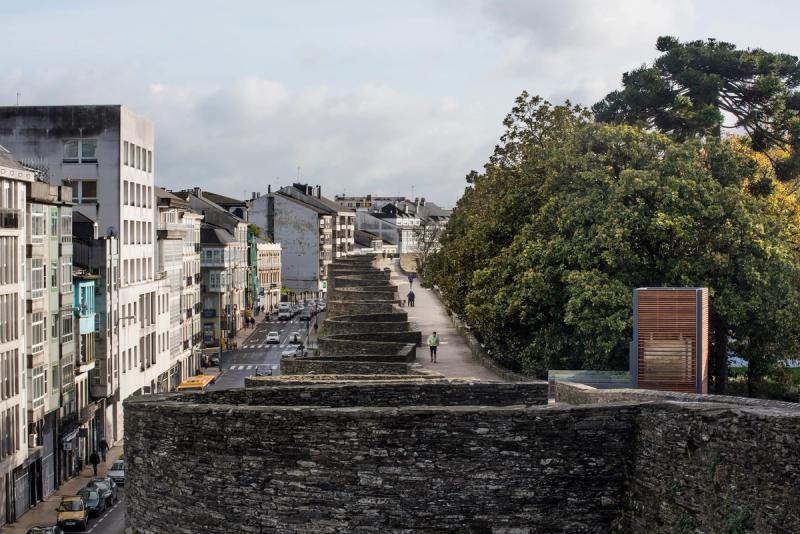
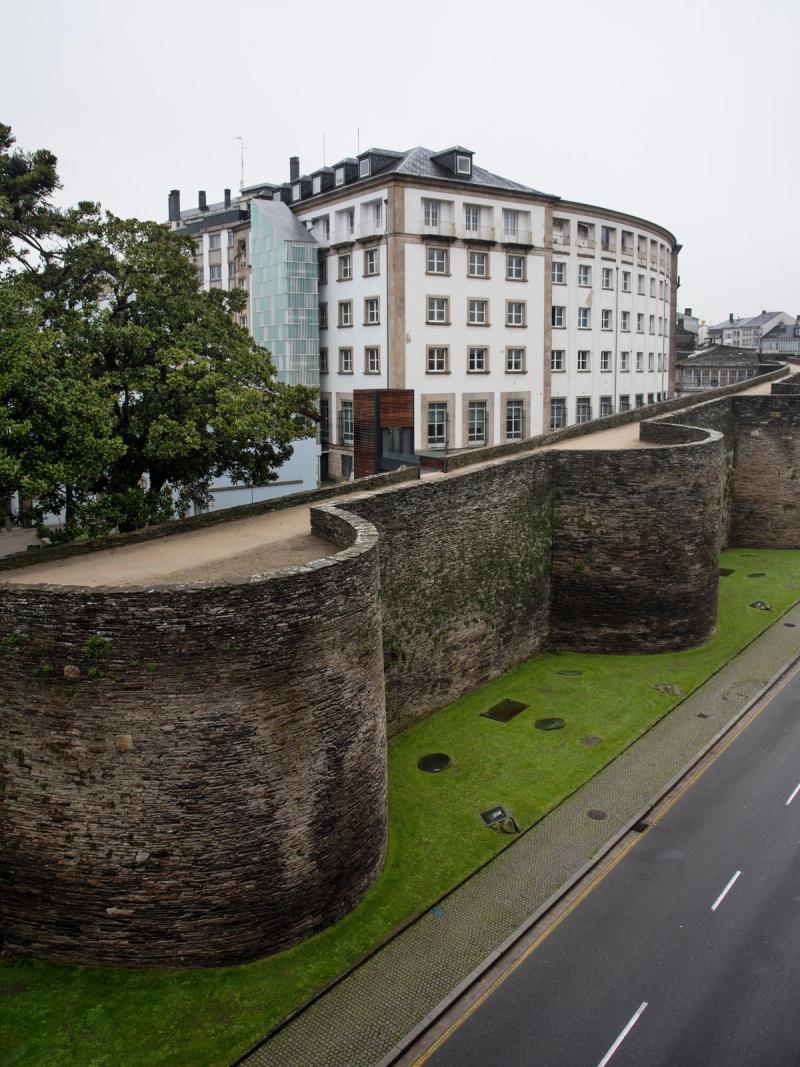
This National Monument is the finest living example of preserved fortifications in Europe, whose alterations over more than 17 centuries of history have followed the principles laid down by the Roman engineer Vitruvius.
Once it lost its military purpose, it was transformed into a magnificent promenade that encircles the heart of the city.
Access to the interior of the Roman fortification complex is provided through 10 gates. Along the wall-walk, it has internal T-shaped staircases that connect it with the interior.
The need to improve accessibility to this important Roman stronghold led the Xunta to commission a project that would provide an accessible solution, allowing people with different mobility capacities to access and enjoy the monument.
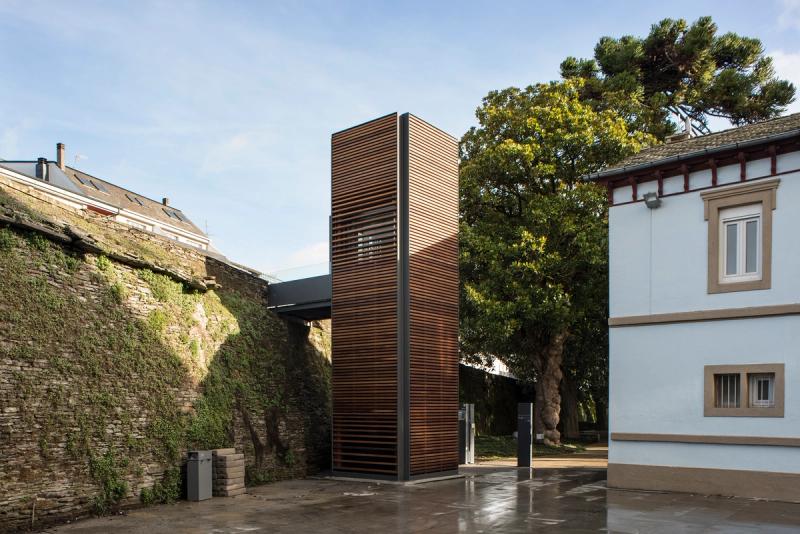
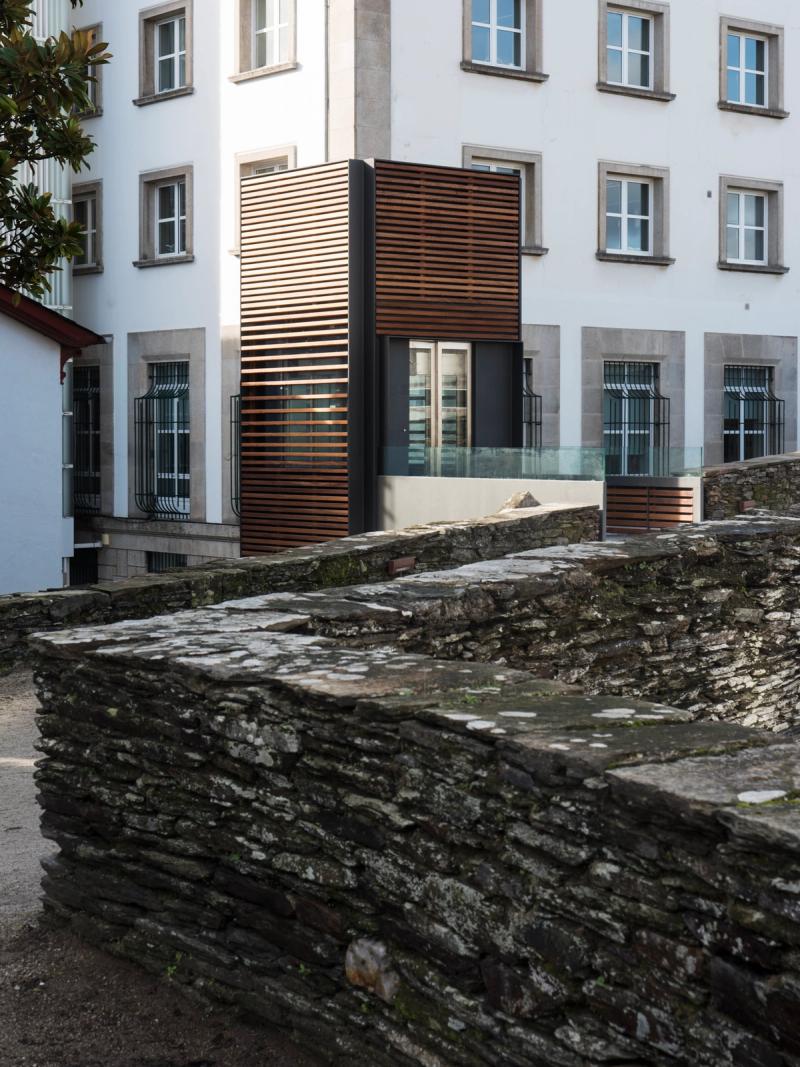
The firm Pernas Varela Arquitectos was commissioned to design an elevator conceived to make it easier to access the walkway located at the northwestern end of the walled enclosure, specifically in the area of the Jardines de la Diputación.
A CONSTRUCTIVE NARRATIVE: THE TRANSFORMATION OF THE ELEVATOR AND ITS URBAN SURROUNDINGS
The project, carried out by Desarrolla, began with the excavation of the lift shaft pit and the consolidation of the foundations using concrete walls, supported on four micropiles that transfer the loads down to a stable soil stratum.Once these walls were stripped of formwork, the electrical installations were installed, with the area properly waterproofed and treated.At the same time, the existing main service installations affected by the works were reorganised.A self-supporting steel structure was then built, consisting of four rolled L-shaped steel columns and a horizontal framework made of hollow rectangular steel tubes. All elements are joined by welding and finished with a paint coating similar to the surrounding urban features.The walkway connecting the lift landing with the promenade along the wall is built as a horizontal platform with a metal structure and a perforated sheet finish, welded to the lift volume but independent from the wall itself (simply resting on it).
The ensemble is completed by installing a balustrade made of metal sheet and safety glass. On the inner bays, the skirting on both sides is clad with horizontally mounted wooden slats.The enclosure of the main volume is built using a solid-wood lattice made up of solid-wood slats and laminated safety glass, wrapping the structural box. The architects justify the choice of this material due to its “rapid weathering of the wood surface under the action of the sun’s rays”, which “gives it a silvery-grey tone that will naturally harmonize both with the trees in the Diputación garden and with the historic masonry of the wall and its living patina”.
As for the roof, it is built with a galvanized steel metal structure.Regarding lighting, LED strips are installed along the walkway, illuminating the entire circulation area.
The stone pavements affected by the intervention are restored, and a new concrete paving is laid in the access area created within the gardens.